

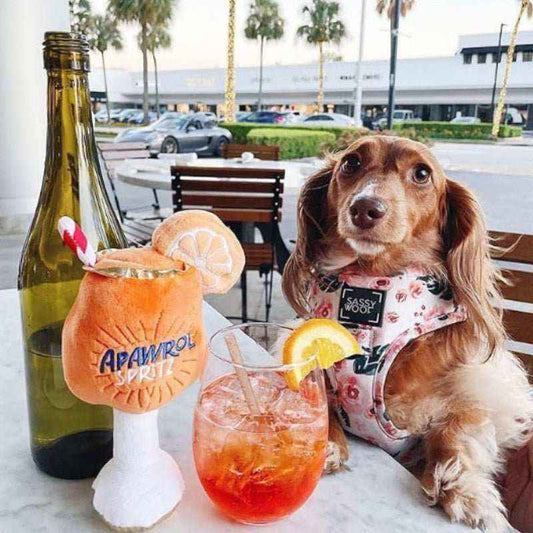







The 5 Highest Profit Margins in Pet Fashion
Share
💰 The Truth About Pet Fashion Margins: Not All Products Are Created Equal
If you work in the pet fashion industry, you know that not all products generate the same profit . You can sell hundreds of cheap leashes and earn less than a single premium jacket. The difference? The profit margin.
By 2026, the global pet fashion market will be worth over €32 billion, but only those who understand high-margin categories can build a sustainable business . In this article, you'll discover the 5 categories that generate the highest profits, with real data, pricing strategies, and practical advice to maximize your ROI.
Whether you run a brick-and-mortar boutique, an e-commerce business, or are considering entering the industry, this guide will show you where to focus your investments to get the most return .
📊 How to Calculate Profit Margin (And Why It's Crucial)
Before we get into the details, let's clarify the basics. The profit margin is the percentage of profit on the selling price , not on the cost.
Margin Formula:
Margin % = [(Selling Price - Cost) / Selling Price] × 100
Practical example:
- Product cost: €30
- Sale price: €90
- Margin: [(90-30)/90] × 100 = 66.7%
In traditional retail, a 50% margin is considered good. In luxury pet supplies, margins can exceed 80% in specific categories. Here's how.
🥇 #1 - Handcrafted Leather Accessories: Margins 70-85%
Italian leather accessories represent the category with the highest margins in pet fashion. These include collars, leashes, harnesses, and carriers made from premium leathers.
💎 Why Margins Are So High
High perceived value: Customers associate Italian leather with luxury and craftsmanship. A leather collar can sell for €120-€180 even if the production cost is €25-€35.
Low price competition: Unlike mass-market products, handcrafted accessories don't compete on price but on exclusivity. Premium customers aren't looking for discounts .
Durability as justification: "It lasts a lifetime" is the perfect selling point. The customer perceives the purchase as an investment , not an expense.
📈 Real Market Numbers
| Product | Average Cost | Selling Price | Margin % |
|---|---|---|---|
| Premium leather collar | €25-€35 | €120-€180 | 75-80% |
| Braided leather leash | €30-€40 | €140-€200 | 75-80% |
| Handmade harness | €35-€50 | €160-€250 | 75-80% |
| Leather transport bag | €80-€120 | €350-€600 | 70-80% |
💡 Winning strategy: Create matching sets (collar + leash + harness) with bundle pricing. The customer perceives added value and you increase the average receipt by 40-60% .
🥈 #2 - Premium Grooming and Cosmetics: Margins 65-80%
Professional shampoos, revitalizing conditioners, dog perfumes, and wellness products represent the second most profitable category , with the advantage of frequent purchases.
🔬 The Secret to High Margins in Grooming
Professional dilutable formats: A 5-10 liter bottle costs €40-€80 wholesale but sells for €180-€350. Customers perceive this as a convenience compared to smaller formats , and you maximize your margin.
Low-cost "premium" ingredients: Natural extracts, essential oils, and silk proteins cost little to produce but justify prices 3-4x higher than mass-market products .
Purchase Recurrence: Unlike a coat (a one-time purchase), shampoo is repurchased every 2-3 months. Much higher customer lifetime value .
📦 High Margin Grooming Categories
- Specific shampoos for coats: White, red, black (margin 70-80%)
- Professional Reviving Conditioners: 5L Formats (65-75% Margin)
- Luxury perfumes and deodorants: 100-200ml bottles (75-85% margin)
- Hair and Skin Supplements: Capsules and Oils (60-70% margin)
- Brushes and grooming tools: Premium design (65-75% margin)
💡 Winning strategy: Offer free in-store grooming consultations. Customers who receive personalized advice spend 60% more and become loyal to the brand.
🥉 #3 - Luxury Seasonal Clothing: Margins 60-75%
Coats, waterproof jackets, technical sweatshirts and premium seasonal clothing represent the third highest-margin category , with concentrated sales peaks.
🧥 Why Luxury Clothing Generates High Margins
Seasonality creates urgency: "Fall/Winter 2026 Collection" communicates temporal exclusivity. Customers purchase without waiting for discounts because they fear stocks will run out.
Technical materials justify premium prices: Waterproof fabrics, thermal padding, reflective finishes: the additional cost is minimal (€10-€15) but the price goes up by €50-€80 .
Emotional buying: A coat isn't just functional, it's an extension of its owner's style. The purchasing decision is 75% emotional .
👗 High Margin Clothing Categories
| Category | Production Cost | Selling Price | Margin % |
|---|---|---|---|
| Luxury winter coat | €40-€60 | €150-€280 | 70-75% |
| Technical waterproof jacket | €30-€45 | €120-€200 | 70-75% |
| Premium Hoodie | €18-€28 | €65-€110 | 65-70% |
| Exclusive design T-shirt | €8-€12 | €35-€55 | 65-75% |
💡 Winning strategy: Launch limited-edition capsule collections (50-100 pieces). Perceived scarcity increases value and allows for 20-30% higher prices .
🏅 #4 - Dog Houses and Designer Furniture: Margins 55-70%
Orthopedic beds, memory foam pillows, cashmere blankets, and designer pet furniture represent high-value purchases with excellent margins .
🛏️ The Competitive Advantage of Premium Furniture
Very high average receipt: A designer dog bed sells for €250-€600. A single piece generates the profit of 20-30 inexpensive accessories .
Low purchase frequency = less price sensitivity: The customer buys a dog bed every 3-5 years. They have no recent price references and accept premium pricing .
Integration with home furnishings: Designer dog houses aren't "for dogs," they're furnishing accessories. Customers view them as furniture, not pet accessories .
🏠 High Margin Furniture Products
- Orthopedic memory foam beds: €80-€120 cost, €280-€450 sale (65-70% margin)
- Designer wooden/rattan dog houses: €120-€180 cost, €400-€700 sale (65-70% margin)
- Cashmere pillows and blankets: €40-€60 cost, €140-€250 sale (65-70% margin)
- Handcrafted ceramic bowls: €15-€25 cost, €60-€120 sale (70-75% margin)
💡 Winning strategy: Create "Home & Pet" corners with complete styling (bed + blanket + matching bowls). Visual merchandising increases sales by 45% .
🎖️ #5 - Personalization and Custom Products: Margins 65-80%
Engraved collars, personalized coats, monogrammed accessories, and custom-made products represent the category with the most defensible margin against the competition.
✨ Why Personalization is Worth Gold
Zero direct competition: A customized product is unique by definition. The customer cannot compare prices elsewhere .
Minimum additional cost: Laser engraving, embroidery, digital printing: the extra cost is €3-€8, the applied surcharge is €25-€50 .
Emotional premium: "Made especially for my Rex" justifies any price. The perceived value is 3-4 times higher than the standard product .
Non-refundable: Custom products are non-returnable. Zero risk of returns and 100% margin protection .
🎨 Profitable Customization Services
- Laser engraving on collars: Cost €3-€5, surcharge €25-€40 (extra margin 80-85%)
- Name embroidery on coats: Cost €5-€8, surcharge €30-€50 (extra margin 75-80%)
- Digital printing on t-shirts: Cost €4-€6, surcharge €20-€35 (extra margin 75-80%)
- Custom products: Cost +15-20%, price +60-80% (margin 70-75%)
💡 Winning strategy: Offer free personalization over €150. Increase average receipts by 35% and build customer loyalty .
📉 Categories to Avoid: Low Margins and High Competition
Not all categories deserve space in your assortment. Here's what to avoid if you're aiming for profitability :
❌ Food and snacks (15-30% margin): High turnover but slim margins. Huge volume is required for decent profits. Leave this category to general pet shops .
❌ Low-cost toys (25-40% margin): Fierce competition with Amazon and discount retailers. Low prices = price-sensitive customers .
❌ Basic mass market accessories (30-45% margin): €10 leashes, plastic bowls, generic collars: margins insufficient to cover the costs of premium retail .
❌ Seasonal non-luxury products (35-50% margin): €20-€30 coats: neither sufficient margin nor premium positioning .
🎯 How to Build a High-Margin Assortment
Knowing profitable categories isn't enough. You need a balanced assortment strategy .
📊 The 70/20/10 Rule
- 70% of stock: High-margin categories (leather accessories, grooming, luxury clothing)
- 20% of stock: Booster and complementary products (average margin 50-60%)
- 10% of the stock: New and market testing (variable margin)
Objective: Weighted average margin of 65-70% on the entire assortment.
💡 Advanced Pricing Strategies
Anchor pricing: Display the most expensive products first. A €350 coat makes a €180 one seem "reasonable."
Strategic bundles: Collar and leash for €250 instead of €280 each. The customer receives a discount, while you maintain a 72% margin .
Tiered pricing: Offer 3 tiers (Good, Better, and Best). 60% of customers choose the middle tier, the one with the highest margin .
❓ Frequently Asked Questions (FAQ)
🤔 What is the average margin in the pet fashion industry?
The average margin in pet fashion ranges from 45% to 75% depending on the positioning. Mass-market retailers operate at 40-50% margins, while luxury boutiques achieve 65-75%. Premium categories (artisan leather, professional grooming, customization) exceed 80%. The key is product mix and consistent positioning.
🤔 How to justify premium prices without losing customers?
Premium pricing is justified with storytelling, tangible quality, and impeccable service . Communicate the origin (Made in Italy), the materials (vegetable tanned leather), and the craftsmanship (handmade). Offer luxury packaging, personalized advice, and extended warranties. Premium customers aren't looking for the lowest price; they're looking for the highest value.
🤔 Is it better to have a few high-margin products or many medium-margin ones?
In luxury, less is more: a few high-margin products generate more profit with less complexity . 50 selected SKUs with a 70% margin beat 200 SKUs with a 45% margin. Advantages: less tied-up capital, simplified management, clearer positioning, more qualified customers. Focus on high-margin categories and become the benchmark in those niches.
🚀 Conclusion: High Margins = Sustainable Business
In pet fashion in 2026, profitability depends not on volume but on strategic category selection . The five high-margin categories we analyzed share common characteristics:
- ✅ High perception of value (luxury, craftsmanship, exclusivity)
- ✅ Low price competition (clear differentiation)
- ✅ Emotional buying (emotional purchasing decision)
- ✅ Margins 65-85% (economic sustainability)
Remember: a business with 70% margins can survive on half the sales of one with 35% margins . Less stress, more profit, better customers.
👉 Ready to optimize your assortment? Analyze your current product mix, identify low-margin categories, and gradually replace them with high-value ones. Your bottom line will thank you .
💼 Want to learn more about pricing strategies, supplier selection, and best practices in premium pet retail? Explore our blog for practical guides and insights from the world of luxury pet business.


